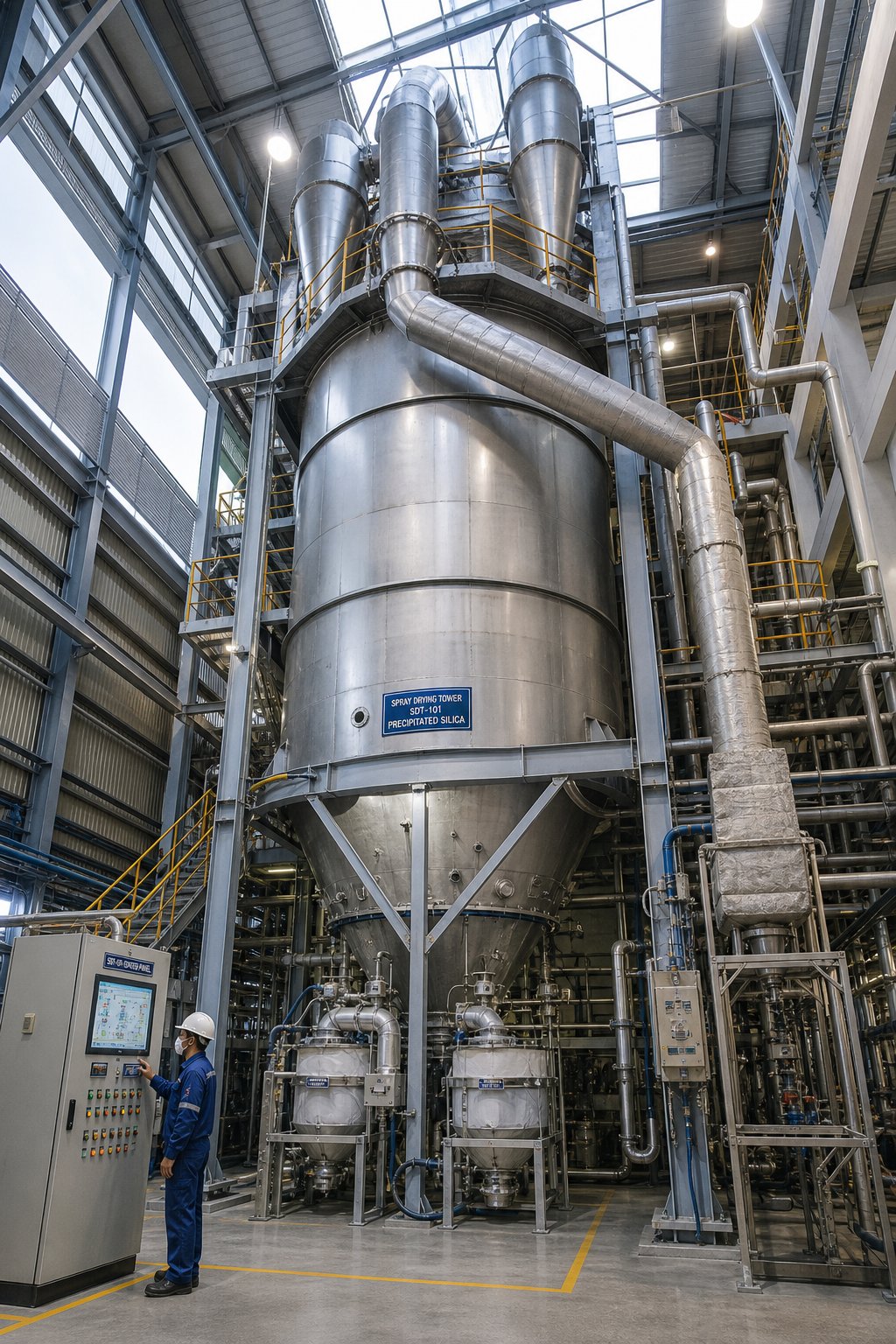
Spray drying tower in the Vistasilica silica plant
Controlled process, consistent output

Six stages from precipitation to packaging

Every batch of Vistasilica precipitated silica follows the same controlled route — reaction, filtration, spray drying, milling, quality control and packaging — so the structure, particle size and purity you validate in a sample hold across repeat orders.

6controlled stages
100%batch QC before release
COAshipped with every order
The production route

How precipitated silica is made

Precipitated silica is built, not mined. Sodium silicate and acid are reacted under controlled conditions to grow a porous silica network, then washed, dried, milled and tested — each stage tuned to the target application.

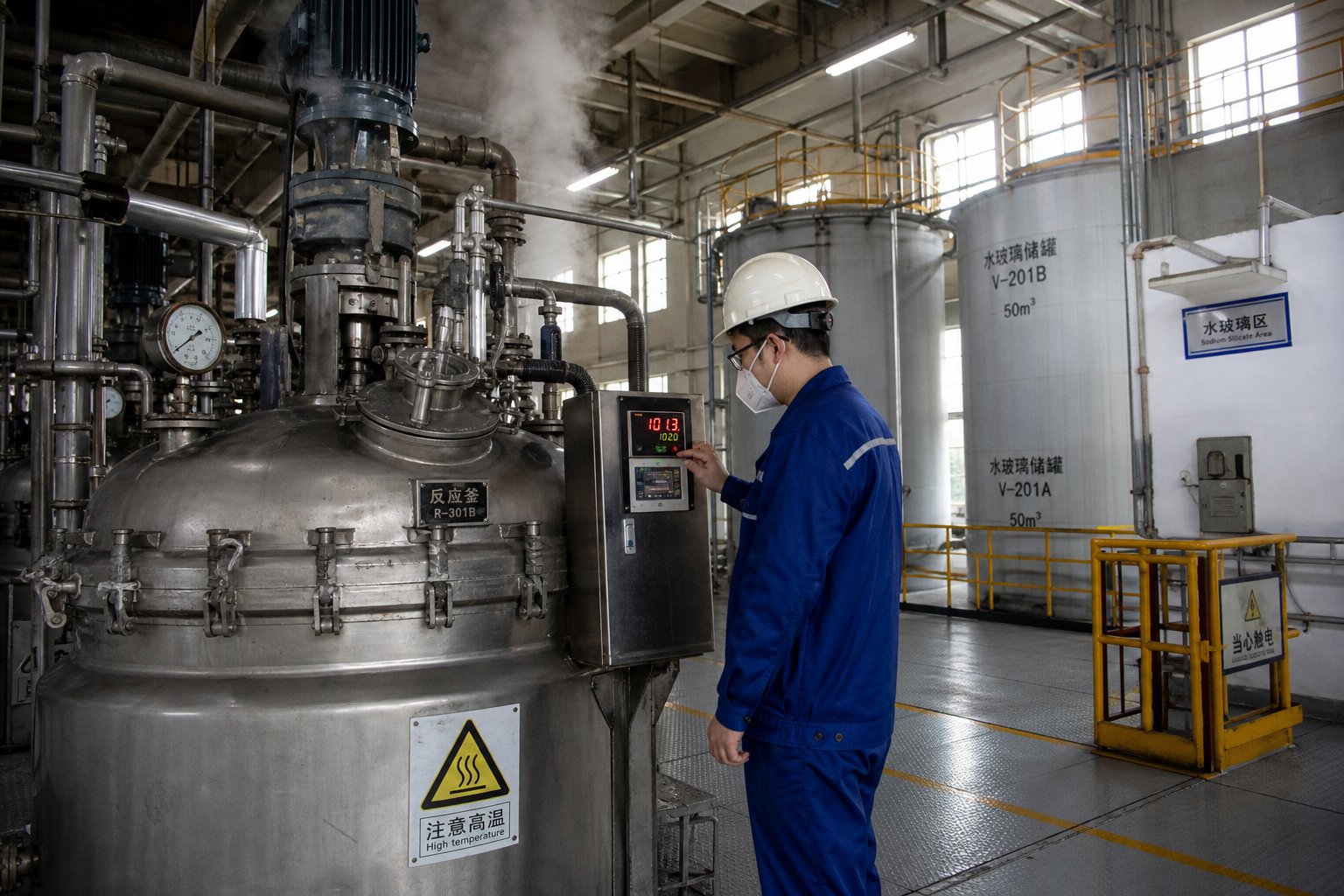
Reaction and precipitation workshop with stainless steel reactors
Stage 01

Reaction & Precipitation

Sodium silicate solution reacts with sulfuric acid in temperature-controlled reactors. Dosing rate, concentration and temperature are tuned to grow the pore structure and surface area that define each grade family — high-structure carriers, thixotropic thickeners or low-abrasion cleaning silicas all start here.

  • Reactor temperature & pH logged continuously
  • Pore structure set at precipitation stage
  • Grade-specific reaction recipes
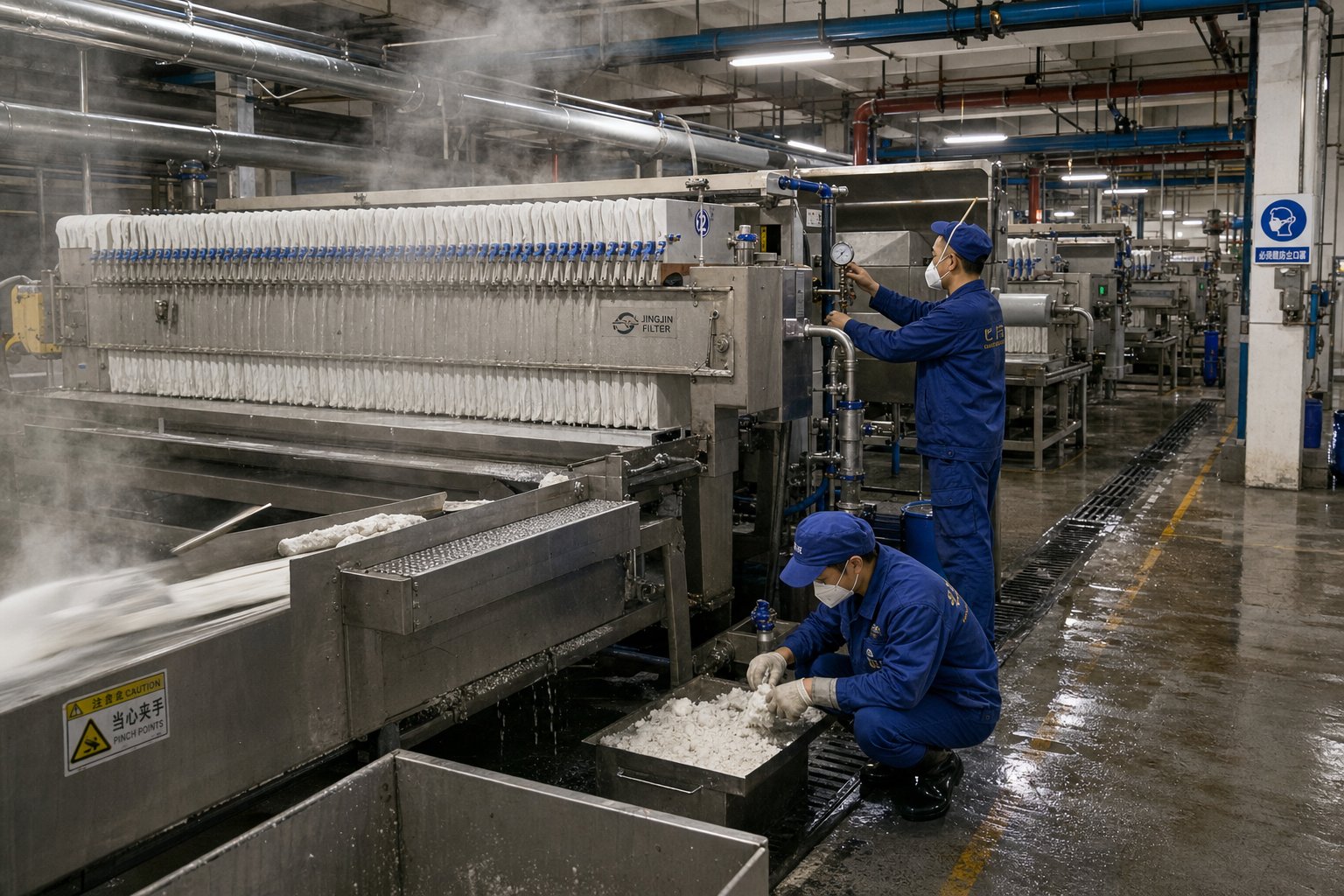
Plate-and-frame filter press dewatering and washing silica slurry
Stage 02

Filtration & Washing

The silica slurry is dewatered on plate-and-frame filter presses and washed repeatedly to remove residual sodium sulfate. Conductivity and filtrate clarity are checked against spec so downstream drying and the final purity are not compromised by residual salts.

  • Residual salt (Na₂SO₄) washed to spec
  • Filter cake checked before drying
  • Wash cycles tuned per grade
Spray drying tower converting silica slurry into dry powder
Stage 03

Spray Drying

Wet silica cake is redispersed and fed to a spray drying tower. Inlet and outlet temperatures control the final moisture, bulk density and particle structure — the difference between a free-flowing carrier and a compact thickening grade is set at this stage.

  • Tower temperatures control bulk density
  • Consistent moisture < 6% target
  • Structure locked before milling
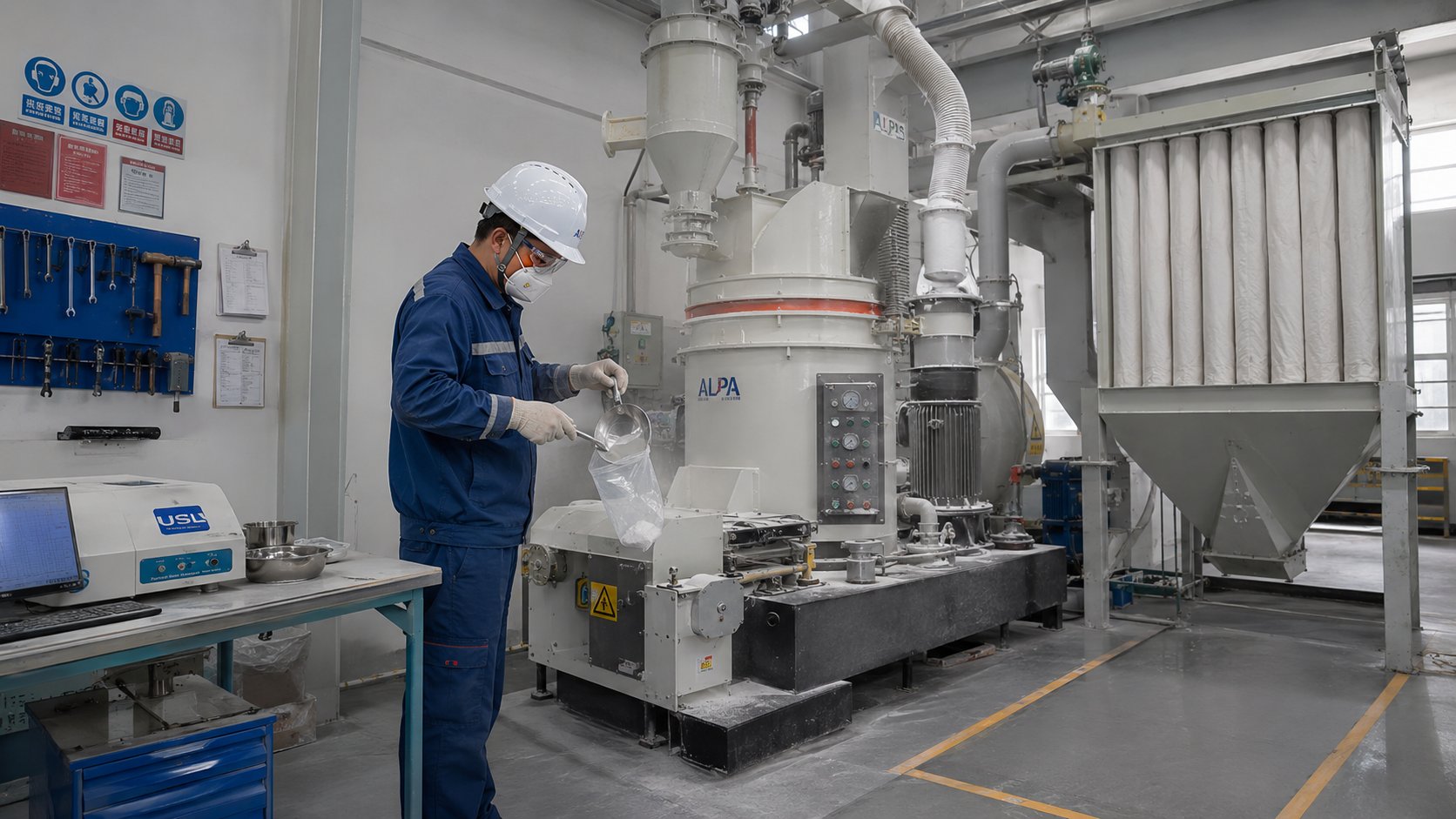
Milling and air classification workshop for silica powder
Stage 04

Milling & Classification

Dried silica is milled and air-classified to the target median particle size (D50), then screened to control the 45µm oversize. This is where a cosmetic-grade fine silica and a coarse feed carrier diverge — same chemistry, different particle distribution.

  • D50 set by air classifier settings
  • 45µm sieve residue controlled per grade
  • On-line particle size verification
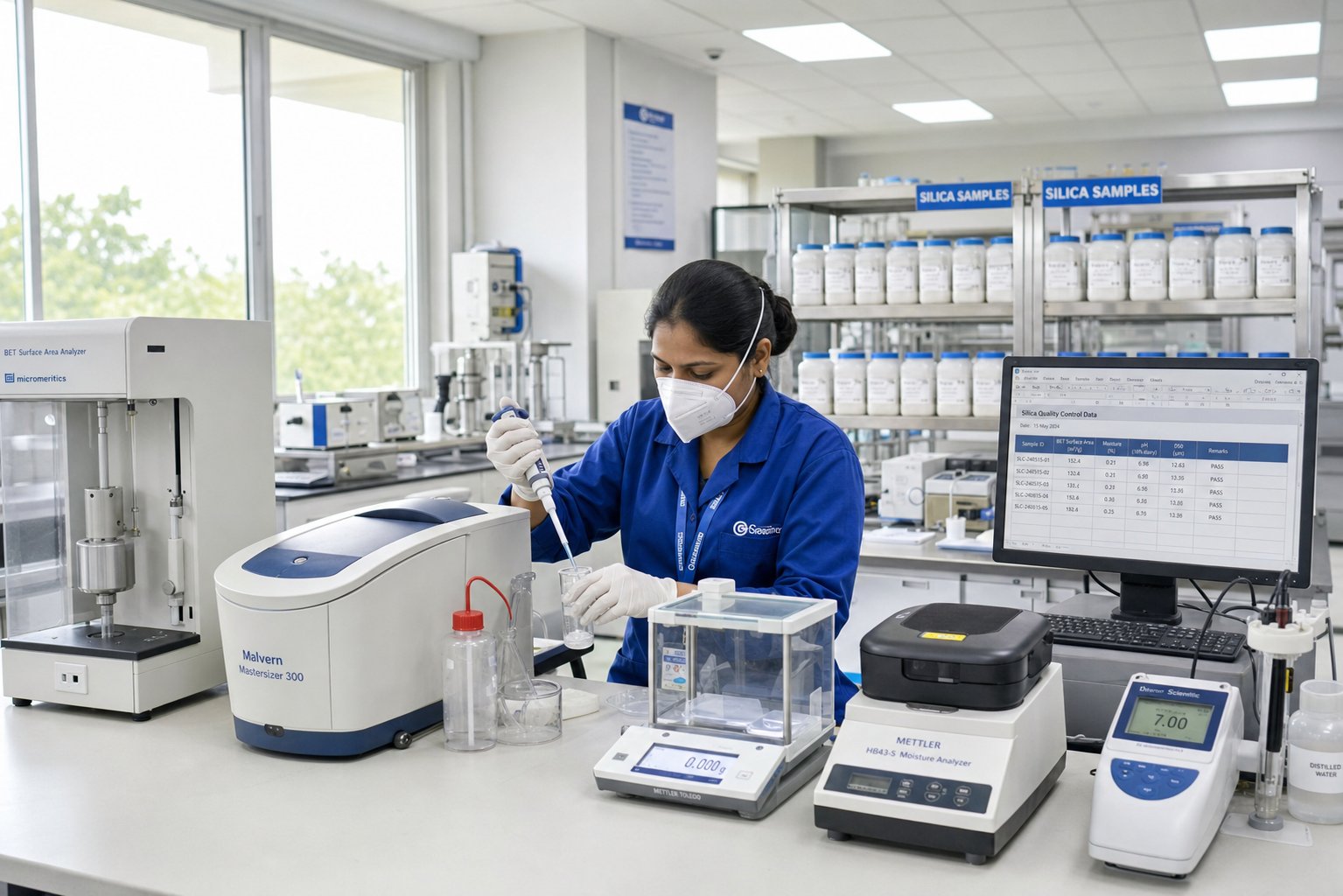
Quality control laboratory testing silica batch properties
Stage 05

Quality Control

Every batch is tested before release — BET surface area, DOP oil absorption, particle size by laser diffraction, pH, moisture, loss on ignition and SiO₂ purity. A Certificate of Analysis is issued and travels with the goods, so your lab and import process have verifiable numbers, not promises.

  • BET, DOP, D50, pH, moisture, LOI, SiO₂
  • COA issued per batch, shipped with goods
  • Retain samples kept for traceability
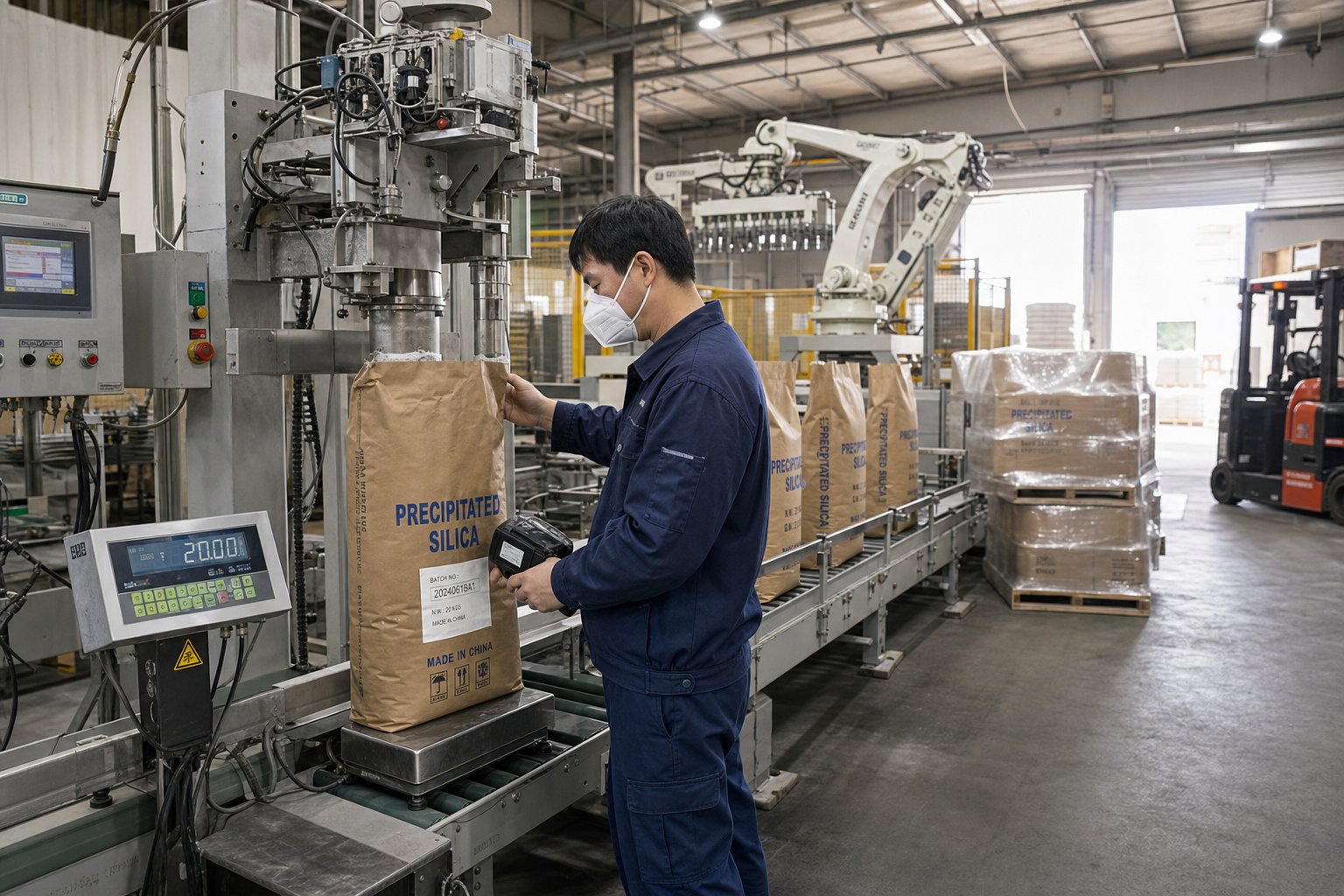
Automated packaging line and finished goods warehouse for silica
Stage 06

Packaging & Warehousing

Finished silica is packed in 20/25 kg multi-wall kraft bags with PE inner liner, or 500 kg / 1,000 kg FIBCs (big bags), palletized and stretch-wrapped. Consolidated shipments let overseas customers trial several grades in one container, then scale repeat orders line by line.

  • 20/25 kg kraft bags · 500/1000 kg FIBCs
  • Batch-labelled and stretch-wrapped pallets
  • Multi-grade consolidation per container
Built for repeatable supply

Why a controlled process matters to you

Sample equals repeat order

The same reaction, drying and milling parameters that made your sample are locked into the production recipe — so the BET, D50 and oil absorption you validated hold across batches.

One process, six tracks

One controlled route produces the full grade range — feed carriers, food flow aids, dental silica, agro carriers, oil-refining silica and cosmetic mattifiers — differentiated at precipitation and milling.

Export-ready packaging

Moisture-proof liners, palletized and stretch-wrapped loads, and multi-grade consolidation make trial orders affordable and repeat orders stable — from 25 kg up to full containers.

Want the full process pack or a plant capability brief?Ask us for TDS, COA templates, packaging specs and lead times for your grades and destination.
Talk to an expert